
Looking Back at Laval Virtual: XR in Healthcare Is Growing, but Scaling Remains the Challenge
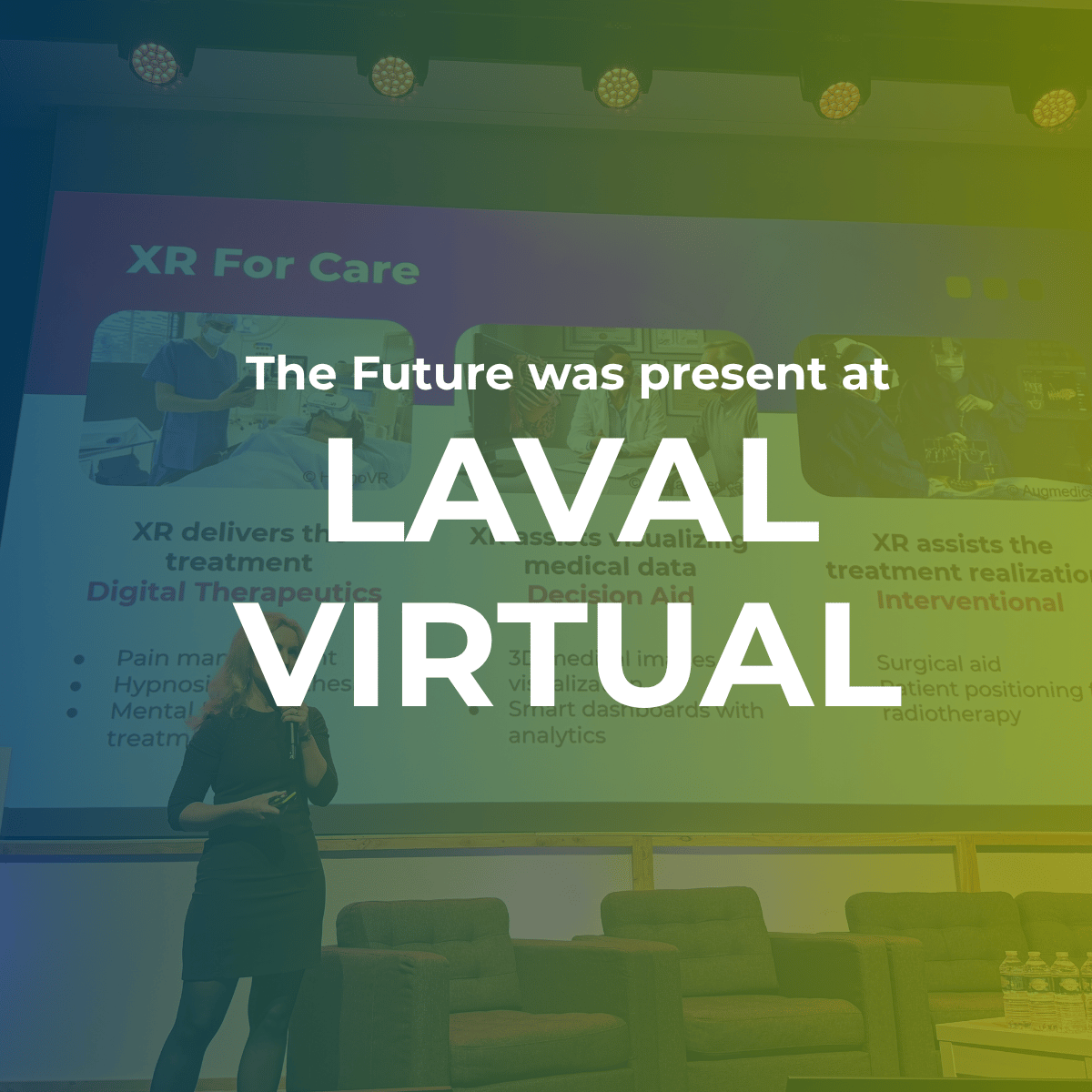
Looking Back at Laval Virtual: XR in Healthcare Is Growing, but Scaling Remains the Challenge
A Strong Dutch Presence as an Ecosystem
Laval Virtual once again showed how fast the XR market is evolving. On behalf of The Future, Monique attended the event to connect with companies, partners and other stakeholders across the international XR landscape. One of the clearest observations was the strong presence of the Dutch delegation in the NL Lounge.
That shared presence did more than increase visibility. It also reflected a broader shift: the Netherlands presented itself as an ecosystem, rather than as a collection of individual organisations. That collective positioning creates stronger visibility internationally and makes it easier to connect technology, use cases and implementation partners.
Strong Momentum for XR, Especially in Healthcare
Throughout the event, many conversations took place with XR companies, particularly in healthcare and, to a lesser extent, energy. These discussions confirmed that XR in healthcare is becoming increasingly mature. Applications in therapy, visualisation and training are growing, and many of the solutions on display were technically strong and well-developed.
At the same time, it became equally clear that technical quality alone is not enough. Many solutions are promising in concept and technology, but still struggle when it comes to implementation, adoption and embedding them into existing processes. As a result, the challenge is gradually shifting from experimentation to integration into real-world systems.
A Maturing Market with Persistent Bottlenecks
A key insight from both the conversations and the talks was that the healthcare XR market is clearly maturing. Use cases are becoming sharper, applications are more concrete and the sense of urgency is widely felt across the sector. Even so, several barriers continue to slow down large-scale adoption.
In particular, validation, certification and medical approval remain major bottlenecks for many companies. As a result, a significant number of solutions remain stuck in the pilot phase, even when their potential is widely recognised. This was also echoed in the contribution of Gert-Jan Brok of InMotionVR, who stressed that moving from pilot to real-world adoption can easily take a decade.
That message resonates beyond a single company. Meaningful impact in XR depends less on short-term hype and more on persistence, long-term development and a clear path towards implementation.
Many Solutions, but Few Ecosystems
Between the lines, Laval Virtual also highlighted another important reality. Many companies are building XR solutions, but far fewer are building the broader ecosystem needed to make those solutions scalable and sustainable.
The market remains fragmented. Collaborations are emerging, but often in an opportunistic or project-based way rather than through long-term, structured cooperation. The need for more standardisation, knowledge exchange and shared frameworks was a recurring theme throughout the event. That confirms that the sector does not only need new applications, but also more coherence and coordination.
In other words, many organisations feel that this is the right moment for XR, but no one has found the definitive model for scaling yet.
What This Means for EduXR
This is exactly the space where EduXR becomes increasingly relevant. While many initiatives focus primarily on technology development, EduXR also addresses the questions of implementation, connection and scalability. The key issue is not only what technology can do, but also how that technology can be embedded in education, organisations and day-to-day practice.
From The Future’s perspective, that creates a clear role: connecting stakeholders, structuring knowledge and contributing to a landscape in which XR solutions become easier to find, apply and scale. The observations at Laval Virtual only reinforced the importance of community building, platform development and stronger exchange between education, companies and technology developers.
Space for Deeper Conversations
In addition to the formal programme, Laval Virtual also created room for valuable conversations in a more informal setting. The combination of content-driven sessions, meetings in the NL Lounge, dinners and networking moments led to meaningful exchanges throughout the event. Especially on the final day, when the atmosphere became calmer, there was more space for deeper and more focused discussions.
That made this edition valuable not only from a market perspective, but also for sharpening our own view on where we can contribute within the XR ecosystem.
The visit also underlined the value of the broader Dutch presence at the event. Thanks go to NBSO Nantes for organising the NL Lounge, with special thanks to Maret Reinders and Anaëlle Fer, to Freerk Faber for helping drive the initiative, and to Province of North Brabant, Province of South Holland, Municipality of Rotterdam and CIIIC for supporting this joint presence.
Laval Virtual confirmed a clear development for us: XR is moving from experimentation towards more mature and meaningful applications, particularly in healthcare. At the same time, real impact will depend not only on the technology itself, but on implementation, validation, collaboration and scaling. That is exactly where The Future, together with EduXR, sees a strong and relevant role.